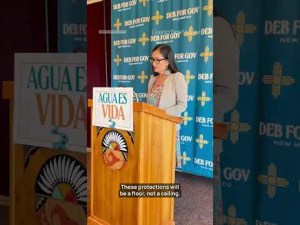
Deb Haaland supports a moratorium on renewed uranium mining in New Mexico, she said in an interview with New Mexico In Depth on Thursday.
The Democratic nominee for governor — an enrolled member of Laguna Pueblo, the site of what was once the largest open-pit uranium mine in the world — said she’s seen the harms of the last era of uranium mining firsthand.
“New Mexico has given enough,” the former U.S. Interior secretary in the Biden administration said. “We had an atom bomb tested in our state. We have had mining and drilling and, you name it, we have given it, and it’s happened a lot in some of the most vulnerable communities in the state.”
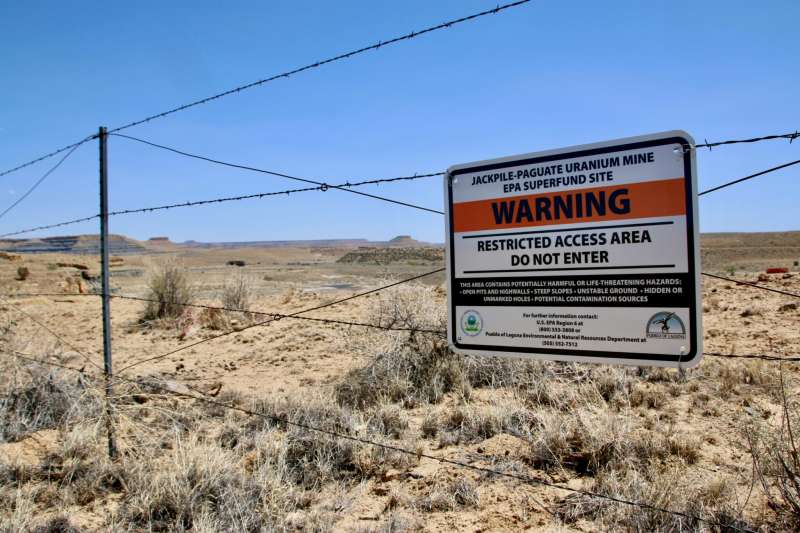
Uranium mining in the mid-to-late 1900s in northwest New Mexico left widespread contamination of water and soil and hundreds of mines yet to be cleaned up. Exposure to uranium and other heavy metals released by uranium mining, along with mining waste, is associated with chronic diseases including cancer and kidney disease. And research has shown Navajo men who worked in the mines have an excess risk of lung cancer.
The industry ceased mining in New Mexico about three decades ago. But with the market price for the heavy metal climbing in recent years, there’s been renewed interest from companies seeking permits to operate in the Grants mineral belt, which Laguna Pueblo sits on the eastern edge of.
“We need to study this,” Haaland said, and anywhere a company is proposing a uranium mine, residents “should have a voice on whether they want those mines in their communities.”
State Sen. Angel Charley (Laguna/Zuni/Diné), who grew up in Laguna Pueblo, proposed in August the state should issue a moratorium until it develops additional regulations.
And earlier this month, New Mexico Land Commissioner Stephanie Garcia Richard, who is Haaland’s running mate, issued an executive order banning outright the leasing of state lands for uranium mining.
Haaland’s opponent, Republican Gregg Hull, doesn’t support a moratorium but wouldn’t “hand out blanket approvals either,” he said in a statement Friday.
“Any project should move forward only after stringent review by state authorities, done in coordination with local and tribal governments, and only after a real, responsible discussion with the people who live there,” Hull, former mayor of Rio Rancho, said. “If a project can’t prove it will be safe, clean, and responsible, it doesn’t get approved. That’s a case by case standard, not a one size fits all rule out of Santa Fe.”
Hull acknowledged the harms of the previous era.
“New Mexico knows what it costs when this is done wrong,” he said, pointing to contamination, abandoned mines, and health effects in tribal and rural communities. “This industry has not always been a good corporate citizen in our state. Under my administration, that changes.”
In explaining her position, Haaland criticized the Trump administration’s efforts to fast-track new mines.
“This administration comes in, and they just want to exploit every single thing they can,” Haaland said, “and so the president pushes companies to start mining uranium again, like it was 1970 or 1960.”