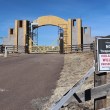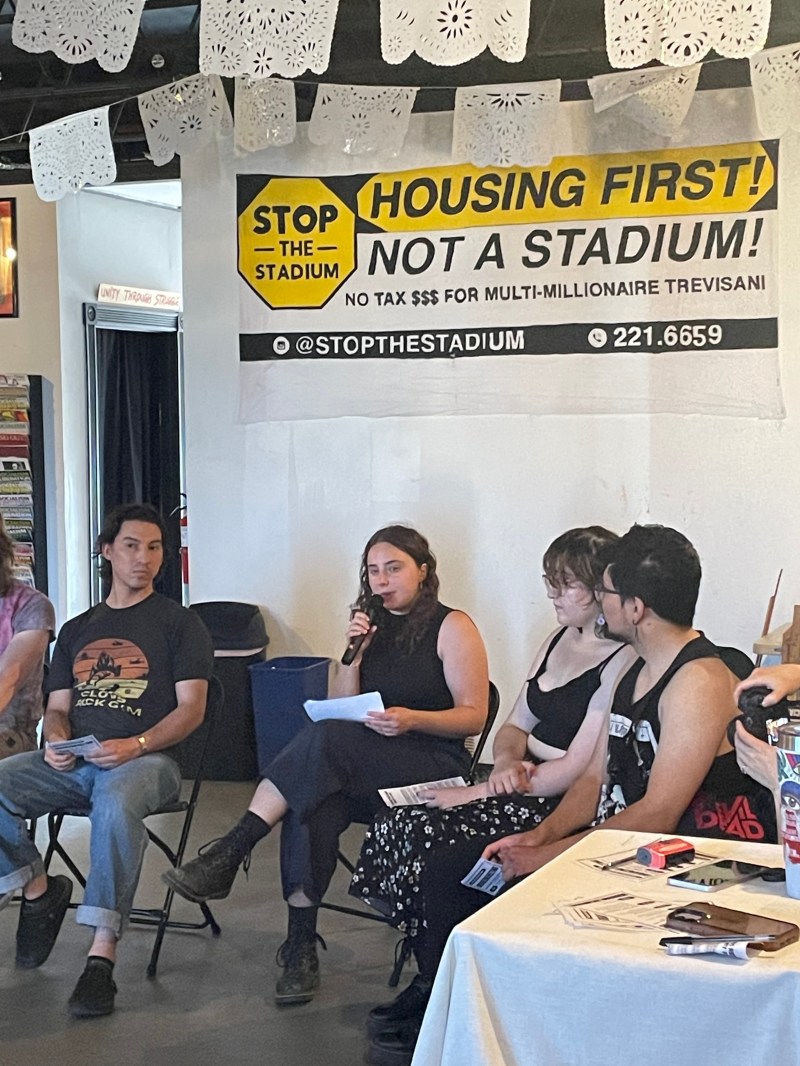
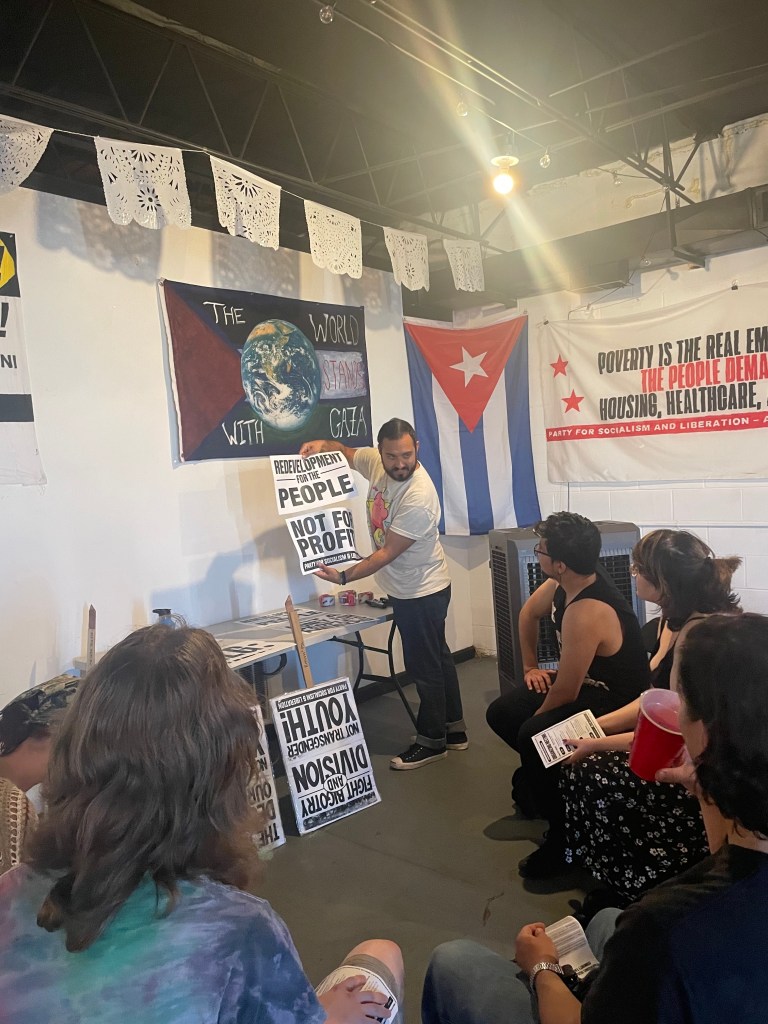
Across the street from the historic New Mexico State Fairgrounds, a few dozen community members held a meeting this month to organize opposition against a $200 million redevelopment project that they worry will squeeze out residents of one of the state’s poorest neighborhoods, the International District (ID) in Albuquerque.
A master plan released earlier this year by the State Fairgrounds District Board, which is tasked with approving decisions for the redevelopment project, included a massive overhaul of the area, including new parks, housing, a hotel, and a multi-use stadium.
The New Mexico Legislature created the Board last year, and legislative leaders and Gov. Michelle Lujan Grisham championed it as a vehicle to transform the site of the annual State Fair into a more robust source of economic activity.
But local organizers worry community members won’t see any of the benefits.
“A lot of people were concerned that a stadium would gentrify the area,” Leah Epstein, an organizer with the Party for Socialism and Liberation (PSL), shared with the group. “We are worried that this will raise rents and push out long-term residents who live in the ID, in part because this is still one of the lowest rent areas in the city.”
The Board, made up of local lawmakers appointed by Gov. Lujan Grisham, has been tasked with negotiating on the community’s behalf to approve development plans provided by Stantec, an international design and consulting agency.
Stantec’s initial proposals in December 2025 included plans for mixed-income housing, green spaces, event spaces, and a hotel. Only one of the three concepts they shared would require the state fair to relocate entirely, something that had previously concerned community members. It wasn’t until March that a stadium was considered to be on the table; a couple weeks after it was proposed, the State Fairgrounds District Board approved the redevelopment plan, including a stadium, in a 6-1 vote. The approved master plan includes a reduced space for the state fair to continue.
“Today’s vote is a major step toward revitalizing the heart of Albuquerque as a meaningful economic engine that creates jobs, draws visitors, and builds lasting value for the surrounding neighborhoods,” said Gov. Lujan Grisham in a press release. “The Fairgrounds have always been a gathering place for New Mexicans, and we want to improve the property to ensure future generations will continue to benefit from the site for years to come.”
But for community organizers like Epstein, it didn’t feel like community members had enough opportunity to voice their concerns.
“Community involvement was pretty bare minimum,” Epstein claimed. “The only details that were really given to the public were that the whole fairgrounds was gonna be redeveloped.”
“This process has not been okay,” Natalie Vargas, the president of South San Pedro Neighborhood Association, told Courier New Mexico.
Vargas was appointed by the Board to a stakeholders committee consisting of leaders from neighborhood organizations who’ve been trying to collect input from residents to take to the board.
“When I’ve held my South Side meetings, [residents] are like, ‘No, we don’t want the state fair to leave, and we don’t want a stadium because none of us even knew about it,’ Vargas reflected. They’re all very upset at the fact that they weren’t even aware or even given an opportunity to ask or talk about this.”
Bernalillo County Commissioner Adriann Barboa was the only board member who didn’t vote for the proposed master plan. In a press conference before the final vote, she expressed concerns about lack of community support.
“Proposing a project of this magnitude without the consent or involvement of the people who live, work, and raise families in this district is a breach of public trust,” she said.
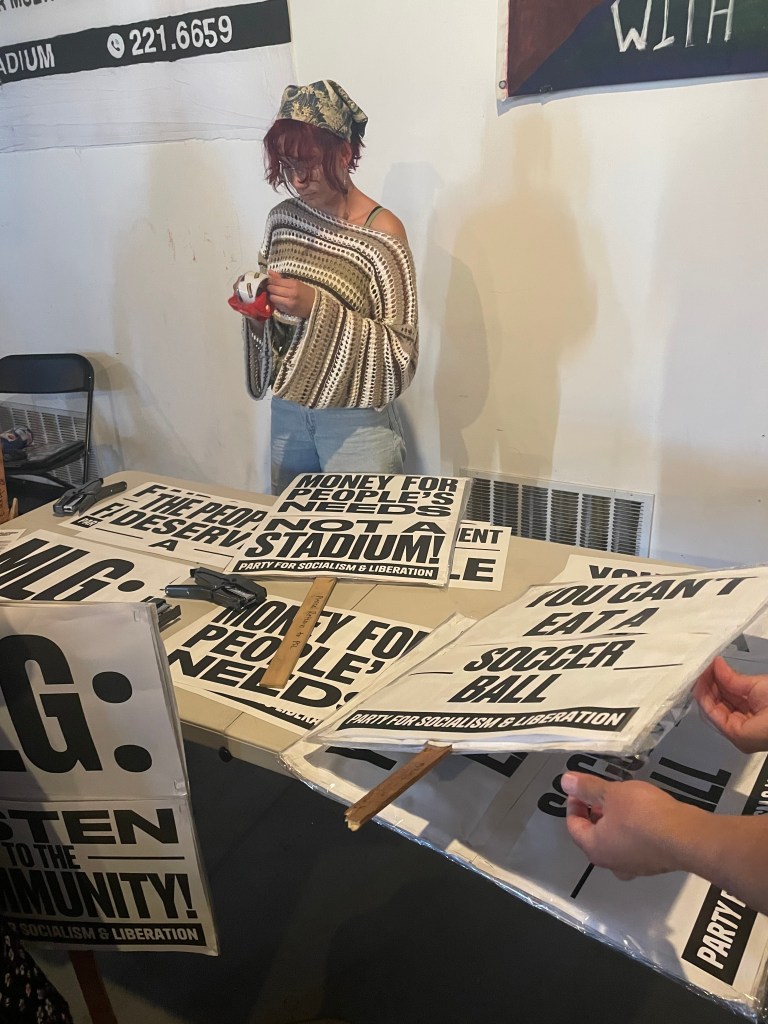
In response to the lack of community input, the Albuquerque chapter of the Party for Socialism and Liberation started its own outreach campaign.
“We knocked on hundreds and hundreds of people’s doors talking to people about the redevelopment,” says Leah Epstein. “People are really concerned about crime and homelessness in the area. The sort of angle that the state government is coming from is that a sports stadium will revitalize this area, that it will inject a ton of money into the local economy. And this is simply not true.”
Decades of research has shown that publicly-financed stadiums built for professional sports teams across the country haven’t produced positive economic outcomes for state taxpayers. In Los Angeles and Minneapolis, publicly-funded stadiums have driven up housing costs and displaced nearby communities.
Vargas also is wary of the state’s argument that a stadium being built near the ID would have positive economic impacts, especially since there hasn’t been a community benefits agreement yet–a contract that would guarantee a level of investment in the local community.
“There’s nothing on the table right now. So is there gonna be? We don’t know,” Vargas said. “And right now the way the process is going, it doesn’t seem like it, right?”
Board members Barboa and Nichole Rogers, an Albuquerque City Council member, have also requested a community benefits agreement to set guidelines for how the redevelopment project would boost local hiring and provide affordable housing.
Both Vargas and Epstein are eager for the next Board meeting that’s already weeks overdue, without any official updates for the public.
“We believe that the public input process should not be ended. We believe that it very much should be ongoing because there was barely a public input process to begin with,” said Epstein. “We believe with a big enough community response, we can stop this.”
Albuquerque PSL is hosting a virtual organizing meeting on July 2 at 6:30pm with stakeholders and community members. You can join using this zoom link.